RV Park Etiquette for Solo Female Travelers
How to Set Boundaries and Make Connections
By Jolea | Airstreaming.life





This blog post contains affiliate links, which means we may earn a small commission at no additional cost to you if you make a purchase through these links. Your support helps keep our content free and allows us to continue sharing valuable tips and resources for your RV adventures. Thank you for supporting us!
RV Park Etiquette for Solo Female Travelers (How to Set Boundaries and Make Connections)
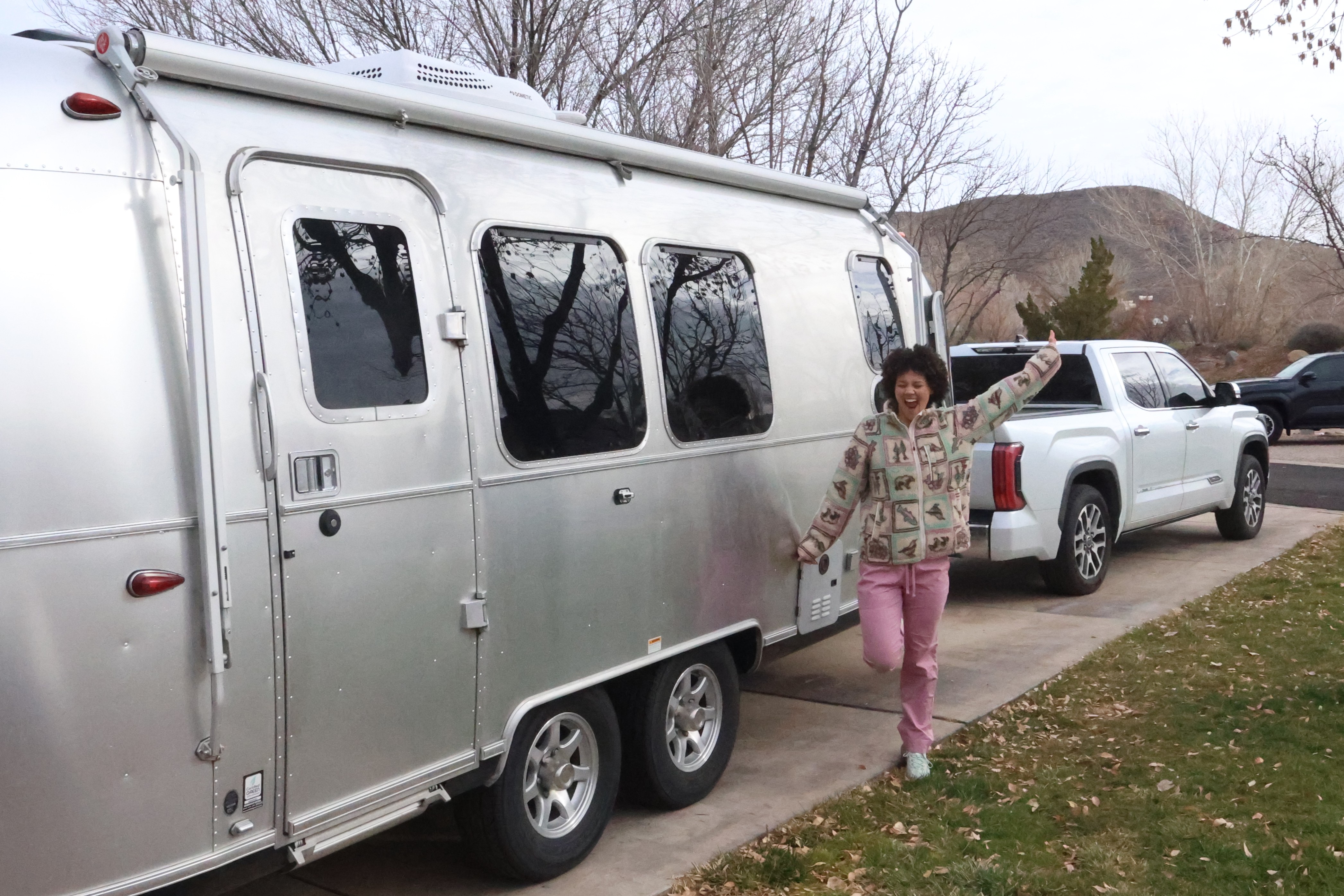
RV parks can be some of the friendliest places on the road, but as a solo female traveler, you also need clear boundaries and practical safety habits. This article walks through how to balance being approachable with protecting your space, time, and comfort. It focuses on seven simple etiquette habits that help you feel safe, confident, and connected.
1. Be Friendly but Not Obligated to Engage
Part of RV park etiquette is acknowledging neighbors without feeling like you owe anyone your time. A simple smile, wave, or “Hey, how’s it going?” goes a long way while still giving you room to decide how much you want to interact.
For solo women, it helps to remember that politeness does not mean unlimited access. You can be warm in passing while still heading back to your rig, earbuds in or book in hand, signaling that you’re not up for a long conversation right now.
2. Use Clear, Respectful Boundaries with Neighbors
Setting boundaries is not rude; it is a key safety and sanity tool for solo female RV travel. If a neighbor lingers or overshares, you are allowed to gently redirect or end the interaction.
You might say things like:
- “It was great chatting, I’ve got some work to finish up inside.”
- “I’m heading to bed early tonight, but enjoy your evening.”
- “I travel solo and keep a pretty low profile, but I’ll wave if I see you around.”
Short, calm phrases like these establish that you are friendly but not available for late-night hangouts, alcohol-heavy gatherings, or anything that doesn’t feel right.
3. Protect Your Personal Information
Good RV park etiquette includes casual conversation but that doesn’t mean sharing your full story with everyone. As a solo woman, think of your personal details as something you control, not something you owe to anyone who asks.
Consider keeping these things vague:
- Exact travel route and future destinations.
- How long you’ll be in the park.
- Whether you’re completely alone or have someone who checks in regularly.
You can keep it light with answers like, “I’m just bouncing around the area for a bit,” or “I work from the road and move when it fits my schedule.” This keeps conversation flowing while limiting how much people know about your routines.
4. Join Social Spaces on Your Terms
Many RV parks have natural gathering spots like clubhouses, dog parks, walking loops, or campfire areas. These are great places to make connections on your own terms.
You can:
- Join group activities (like potlucks or trivia nights) and leave when you’re ready, no explanation required.
- Sit at the edge of a group at first, observing the dynamic before fully joining in.
- Connect with other women, couples, or families if that feels safer than hanging with a rowdy group.
Stepping into social spaces intentionally makes it easier to find aligned, respectful people while minimizing awkward or unsafe situations.
5. Be a Good Neighbor While Still Prioritizing Safety
RV park etiquette goes both ways: you want others to respect your boundaries, and you want to model that same respect. This builds a positive environment around your site and makes it easier to ask for help when you actually want it.
Good neighbor habits include:
- Keeping noise down early in the morning and late at night.
- Not cutting through other people’s sites, even if it’s a shortcut.
- Keeping pets leashed and cleaning up after them promptly.
At the same time, you’re not obligated to let people “hang out” at your picnic table, use your gear, or step into your rig. A simple, “I actually keep my space pretty private, but thank you!” is perfectly polite.
6. Know When and How to Ask for Help
Asking for help is not a weakness; it is part of smart, confident solo travel. RV park etiquette supports offering and requesting help, especially with tricky tasks like backing in, hooking up for the first time, or dealing with a difficult site.
To keep it both safe and comfortable:
- Ask for assistance from staff first when possible; they’re on the clock and familiar with the park.
- If a neighbor offers to help, you can accept while still directing the process: “Spot me from back here, and I’ll go slow.”
- Trust your instincts; if someone’s energy feels off, you can politely decline: “I appreciate it, but I’ve got a system I’m trying to practice.”
This approach lets you benefit from community without feeling indebted or uncomfortable.
7. Use Your Rig and Body Language as Boundaries
Your RV itself can be one of your strongest tools for setting boundaries in a campground. Small visual cues signal whether you’re open to chatting or clearly in “do not disturb” mode.
You can:
- Sit outside with a book or journal when you’re open to conversation.
- Put in headphones or sit inside with blinds partially closed when you want privacy.
- Limit late-night outside time if nearby neighbors are drinking heavily or being loud.
If someone still pushes your boundaries, it’s okay to excuse yourself and go inside. Closing the door, locking it, and turning on cozy lights is both etiquette-friendly and empowering. You are allowed to remove yourself from any interaction that doesn’t feel right.
Balancing Safety and Connection as a Solo Woman
RV park etiquette for solo female travelers isn’t about fear; it’s about being intentional. You can be kind, approachable, and community-oriented while still keeping clear lines around your time, space, and personal information.
By practicing these 7 habits: friendly but not obligated, clear boundaries, limiting personal details, choosing social spaces intentionally, being a good neighbor, asking for help wisely, and using body language and your rig as boundaries, you create an environment where you feel both safer and more connected. Over time, this balance becomes second nature, and RV parks feel less like unknown places and more like temporary neighborhoods you know how to navigate with confidence.
Comments
Related Articles
Travel & hiking tips, product reviews, and more!





Share this page
Recommended
Travel tips & tricks, travel guides and product reviews, and more!